
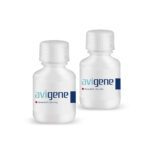
TBE Buffer
Price range: $40.50 through $279.90
Store at room temperature (≤ +25°C)
10X TBE Buffer is a common buffer solution used in molecular biology techniques such as gel electrophoresis. It contains Tris base, boric acid, and EDTA. The “10X” signifies that it is ten times more concentrated than a 1X solution.
It helps to maintain the pH of the solution and provide ions for conducting electricity during electrophoresis. It is often used to separate and analyze nucleic acids based on size.
Related documents for TBE Buffer
| TBE buffer – Manual | coming soon |
|---|---|
|
Avigene™ Electrophoresis reagents |
Download |
TBE Buffer
A Comprehensive Guide for Nucleic Acid Electrophoresis
TBE Buffer (Tris-Borate-EDTA) buffer is a cornerstone in the field of molecular biology, serving as an essential tool for separating and analyzing nucleic acids (DNA and RNA).
Its versatility, ease of use, and ability to yield high-quality results have made it a staple in laboratories worldwide. In this comprehensive guide, we delve deeper into the composition, preparation, function, and optimization of TBE buffer, providing you with a thorough understanding of its role in nucleic acid electrophoresis.
What is TBE Buffer?
It is an aqueous solution composed of three primary components: Tris base, boric acid, and EDTA (ethylenediaminetetraacetic acid). Each of these components plays a crucial role in maintaining the integrity of nucleic acids during electrophoresis and ensuring optimal separation.
- Tris Base: Tris (hydroxymethyl) aminomethane, or Tris base, is a buffering agent that helps maintain a stable pH throughout electrophoresis. It acts as a weak base, accepting protons and resisting changes in pH as nucleic acids migrate through the gel matrix.
- Boric Acid: Boric acid contributes to the buffering capacity of TBE, working in conjunction with Tris base to maintain a consistent pH environment. Additionally, it enhances the resolution of nucleic acid fragments during electrophoresis, particularly those with smaller sizes.
- EDTA: Ethylenediaminetetraacetic acid is a chelating agent that binds to metal ions, such as magnesium and calcium. These ions can act as cofactors for nucleases, enzymes that degrade nucleic acids. By sequestering these ions, EDTA protects nucleic acids from degradation, ensuring their integrity during electrophoresis.
Preparation of TBE Buffer
It is often prepared as a concentrated stock solution, typically 10X (ten times the working concentration). This stock solution can be stored at room temperature and diluted to the desired working concentration (usually 0.5X or 1X) before use. Several recipes for preparing TBE buffer are available, and they can vary slightly in the concentrations of the individual components. However, the general principle remains the same: dissolve Tris base, boric acid, and EDTA in deionized water, adjust the pH if necessary, and then autoclave the solution for sterilization.
Function of TBE Buffer in Electrophoresis
TBE buffer plays a multifaceted role in nucleic acid electrophoresis:
- pH Maintenance: The buffering capacity of Tris base and boric acid maintains a stable pH during electrophoresis. This is crucial because nucleic acids are negatively charged and migrate towards the positive electrode. A stable pH ensures consistent charge and mobility of nucleic acids, leading to accurate separation based on size.
- Electrical Conductivity: TBE buffer provides ions (charged particles) that are necessary for electrical conductivity. When a voltage is applied to the gel matrix, the ions in the buffer carry the electrical current, allowing nucleic acids to migrate through the gel.
- Nucleic Acid Protection: EDTA in TBE buffer chelates metal ions, preventing them from activating nucleases that could degrade nucleic acids. This protective action ensures that the nucleic acid samples remain intact during electrophoresis, allowing for accurate analysis and interpretation of results.
Optimizing Results with TBE Buffer
Several factors can influence the results of nucleic acid electrophoresis when using TBE buffer:
- Voltage: The applied voltage affects the speed and resolution of nucleic acid separation. Generally, a lower voltage (5 V/cm) is recommended for better resolution, especially for larger DNA fragments.
- Agarose Concentration: The concentration of agarose in the gel matrix affects the pore size and, consequently, the separation of nucleic acid fragments. Higher agarose concentrations are suitable for separating smaller fragments, while lower concentrations are appropriate for larger fragments.
- Buffer Recycling: In some cases, TBE buffer can be recirculated between the electrophoresis tank and the gel apparatus. This can help maintain a constant buffer level and temperature, leading to more consistent results.
TBE buffer is a reliable and versatile tool for nucleic acid electrophoresis, offering a balance of cost-effectiveness, ease of use, and high-quality results. By understanding its composition, preparation, function, and optimization, researchers can leverage its benefits to further their scientific endeavors. Whether you are separating DNA fragments for cloning, analyzing RNA transcripts for gene expression studies, or identifying genetic mutations, TBE buffer remains a trusted companion in the world of molecular biology.

Reduction of technical errors.
Easy protocol.
Higher reaction temperature than conventional MMLV.
High yield and sensitive.

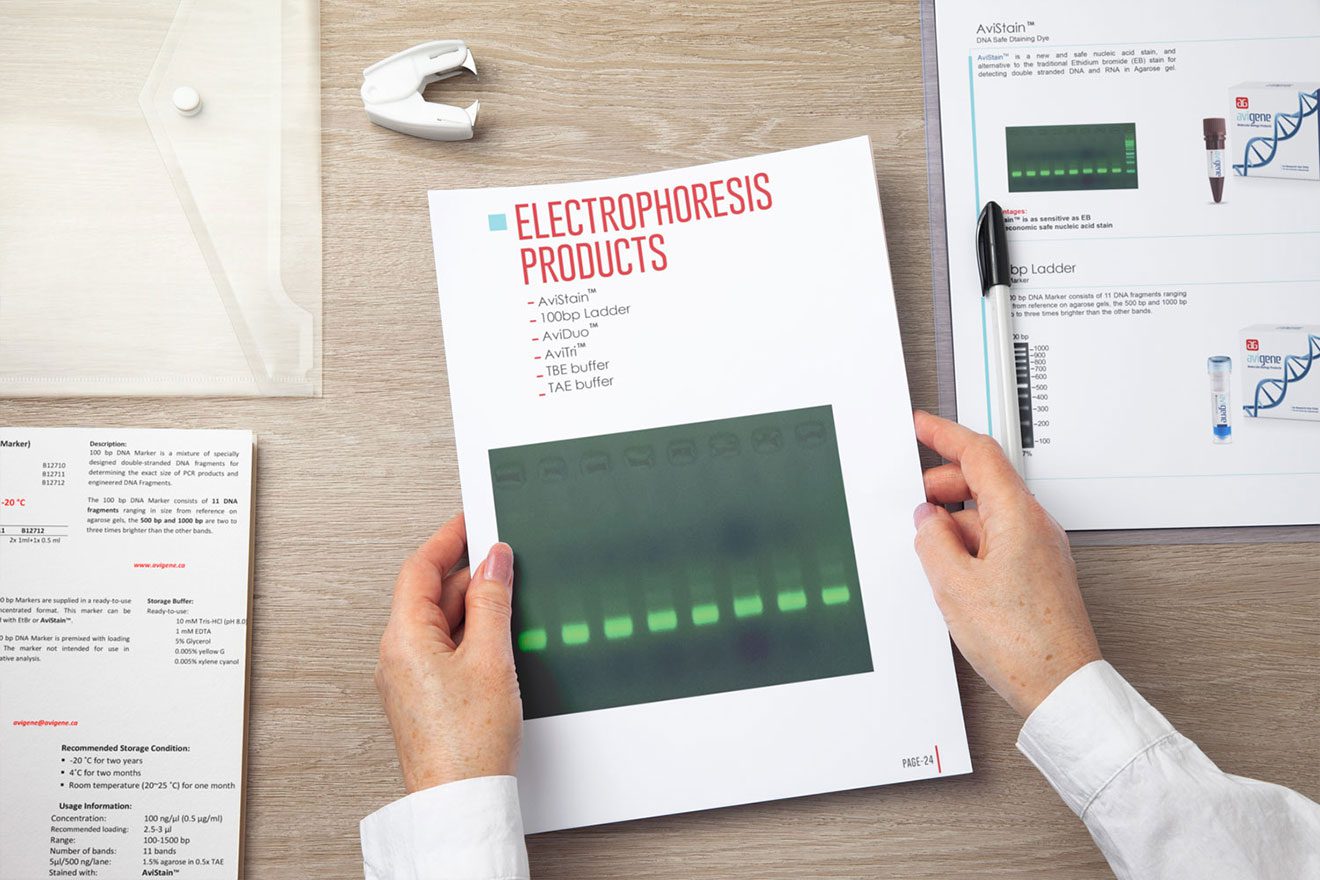
| Brand |
avigene |
|---|---|
| packing |
1 lit ,100 ml ,500 ml |
Related products
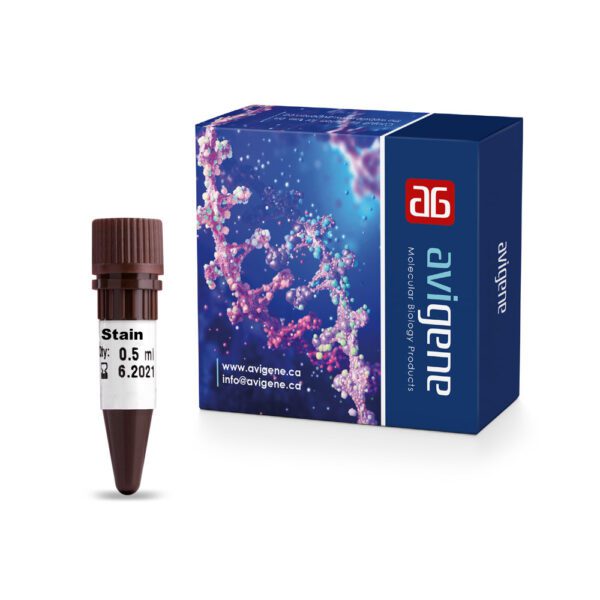
AviStain™
Store at room temperature (≤ +25°C)
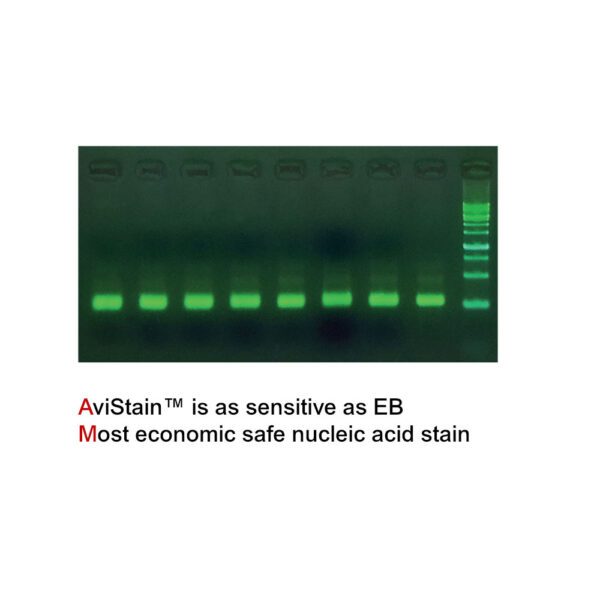
AviStain™ DNA Safe Staining Dye is a new and safe nucleic acid stain, designed as a direct replacement for the potentially hazardous ethidium bromide (EB) stain. It effectively detects double-stranded DNA and RNA in agarose gels with equal sensitivity to EB.Advantages:
- Sensitivity matching traditional EB stain
- The most economical safe option for visualizing nucleic acids
AviDuo™
AviTri™
AviTri™ is a three-color DNA loading dye designed to enhance the precision and efficiency of gel electrophoresis. Its unique blend of Orange G, Bromophenol Blue, and Xylene Cyanol enables researchers to accurately load DNA samples and visually track their migration with exceptional clarity.
Advantages:
- Precise Tracking: Three distinct colors offer superior resolution and accuracy in tracking DNA fragments during electrophoresis.
- Optimized for Small Fragments: In standard agarose gels, Orange G dye migrates faster than Bromophenol Blue or Xylene Cyanol, aligning with DNA fragments between 10 and 20 nucleotides in length.
- Enhanced Visualization: Clear, well-defined bands for easier interpretation of results.
- Versatile: Suitable for a wide range of agarose gel electrophoresis applications.
TAE Buffer
Store at room temperature (≤ +25°C)
50X TAE Buffer A Concentrated Solution for Nucleic Acid Electrophoresis
50X TAE buffer is a highly concentrated buffer used in molecular biology for agarose gel electrophoresis.
TAE Buffer contains Tris base for pH maintenance, acetic acid for conductivity, and EDTA to protect nucleic acids.
This solution is typically diluted to a 1X working concentration before use in electrophoresis experiments to separate DNA and RNA fragments based on size.
Reviews
There are no reviews yet.